Free estimates in Eau Claire, WI

Eau Claire Hardwood Floors: Hardwood Floor Installation, Repair & Refinishing

Eau Claire Hardwood Floors installs, repairs, and refinishes hardwood floors for homes and businesses. We lay solid and engineered hardwood, herringbone and parquet patterns, and stair treads, and we handle commercial floors, water damage, and board replacement. A new install, a refinish of the wood you already have, and a spot repair are separate jobs with separate prices, and we'll tell you which one the floor actually needs.

Jobs start with a free estimate at your place and a written scope that lists species, square footage, subfloor work, and finish. Winters here run furnace-dry and summers run humid, so we meter the subfloor and let new boards acclimate before install. Skip that step and the floor opens gaps in January or cups in July.

Get My Free EstimateTell us about the floor. We reply within one business day.

Why Choose Eau Claire Hardwood Floors

  • Locally owned and operated
  • Free estimates, measured on site
  • Homes, rentals, and businesses
  • Solid and engineered hardwood
  • Clean job sites and contained dust
  • A straight answer on recoat vs. full sand
  • Written scope before work starts
  • Moisture readings before install
  • Hardwood floors only

Hardwood Floor Installation in Eau Claire, WI

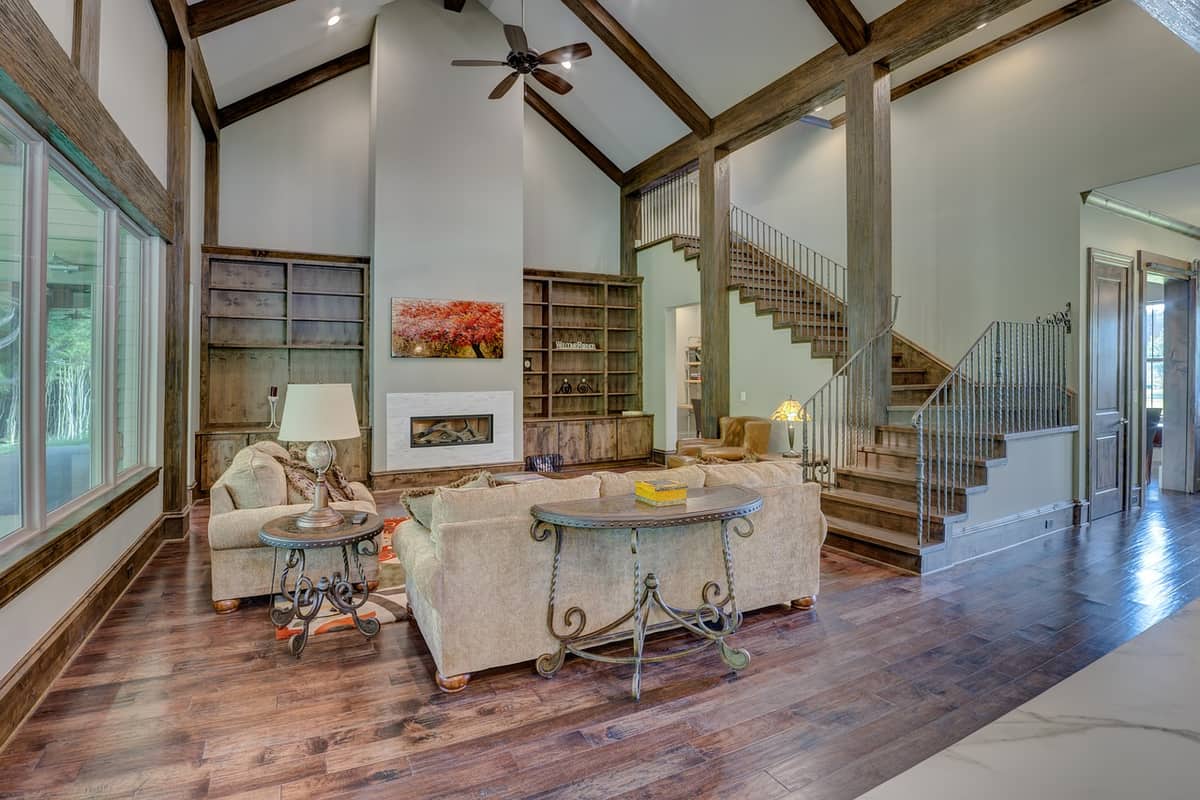
Dark solid hardwood floor in a timber-frame great room with a wood staircase

Solid Hardwood Flooring

Solid hardwood is milled from one piece of wood, usually 3/4 inch thick, and gets nailed or stapled through the tongue into a plywood or OSB subfloor. It can be sanded and refinished many times over its life, which is why it still suits a main floor you plan to keep. Boards run from classic 2-1/4 inch strip up to wide plank, prefinished or site-finished. Solid wood does not belong on a concrete slab or below grade.
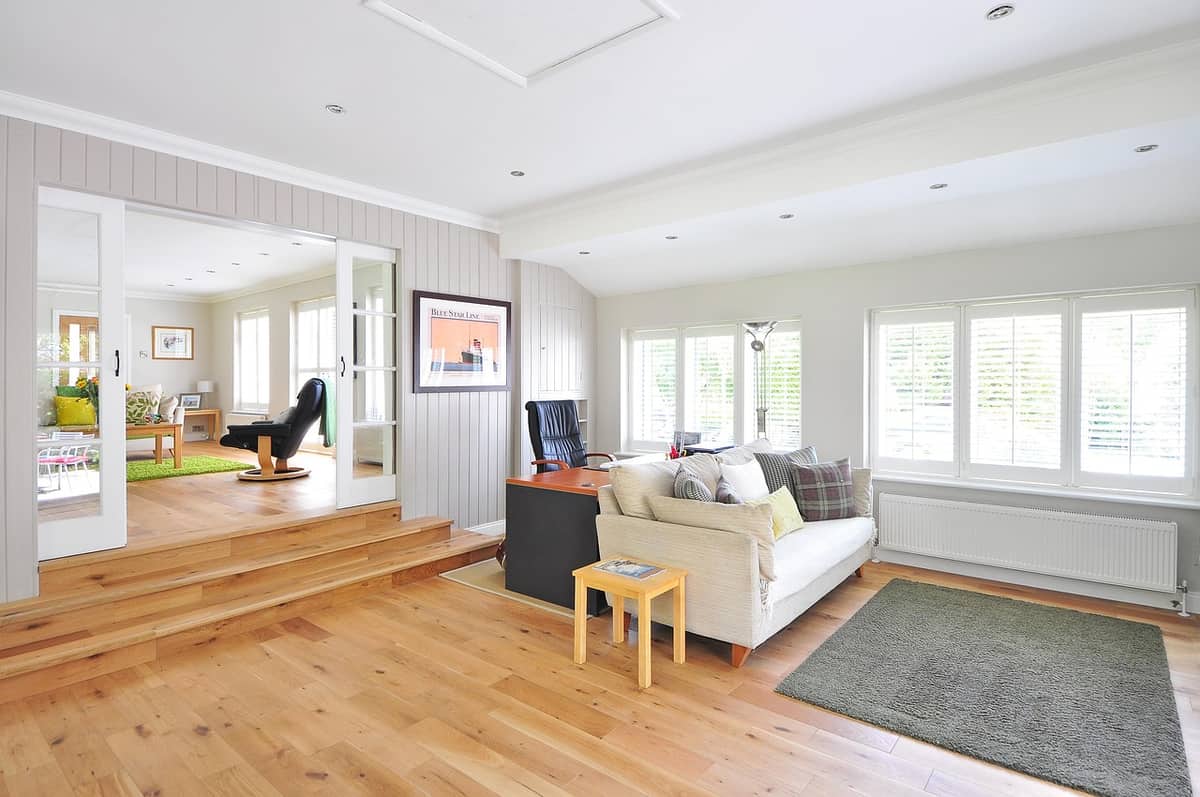
Light oak engineered hardwood planks in a bright living room with a step-up sunroom

Engineered Hardwood Flooring

Engineered planks put a real hardwood wear layer, from about 1 to 6 mm, over a cross-ply plywood or HDF core that fights seasonal movement. That stability makes it the usual pick for basements, concrete slabs, and floors over radiant heat. Depending on the product, we glue it down, staple it, or float a click-lock plank over underlayment. A thicker wear layer means the floor can take a sand and refinish down the road.

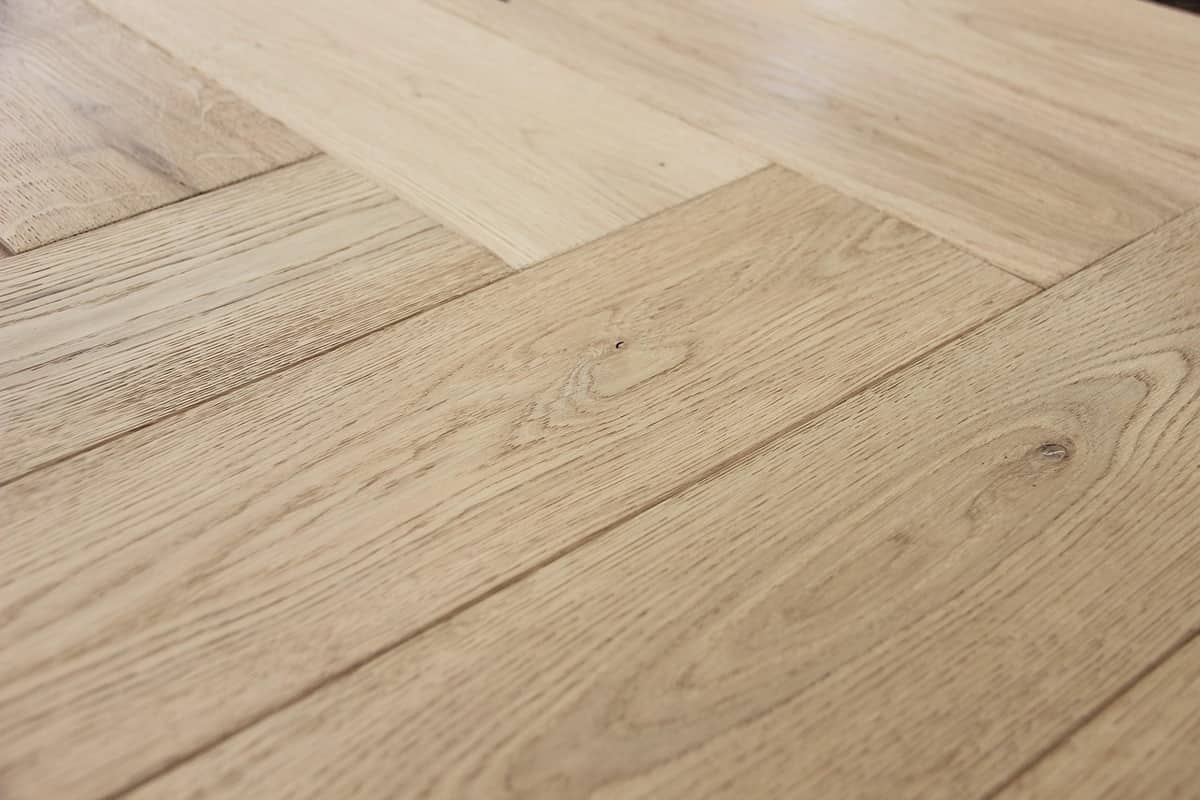
Close-up of oak herringbone parquet flooring pattern

Herringbone & Parquet Floors

Herringbone sets short boards at 90 degrees in a zigzag, chevron cuts the board ends at an angle for a clean point, and parquet uses blocks in a repeating pattern. Pattern work needs a flat subfloor, a snapped center line, and far more cuts than a straight lay, so it takes longer and costs more. Some older houses around town still have original oak parquet in a foyer or dining room, and it can usually be patched, sanded, and refinished.

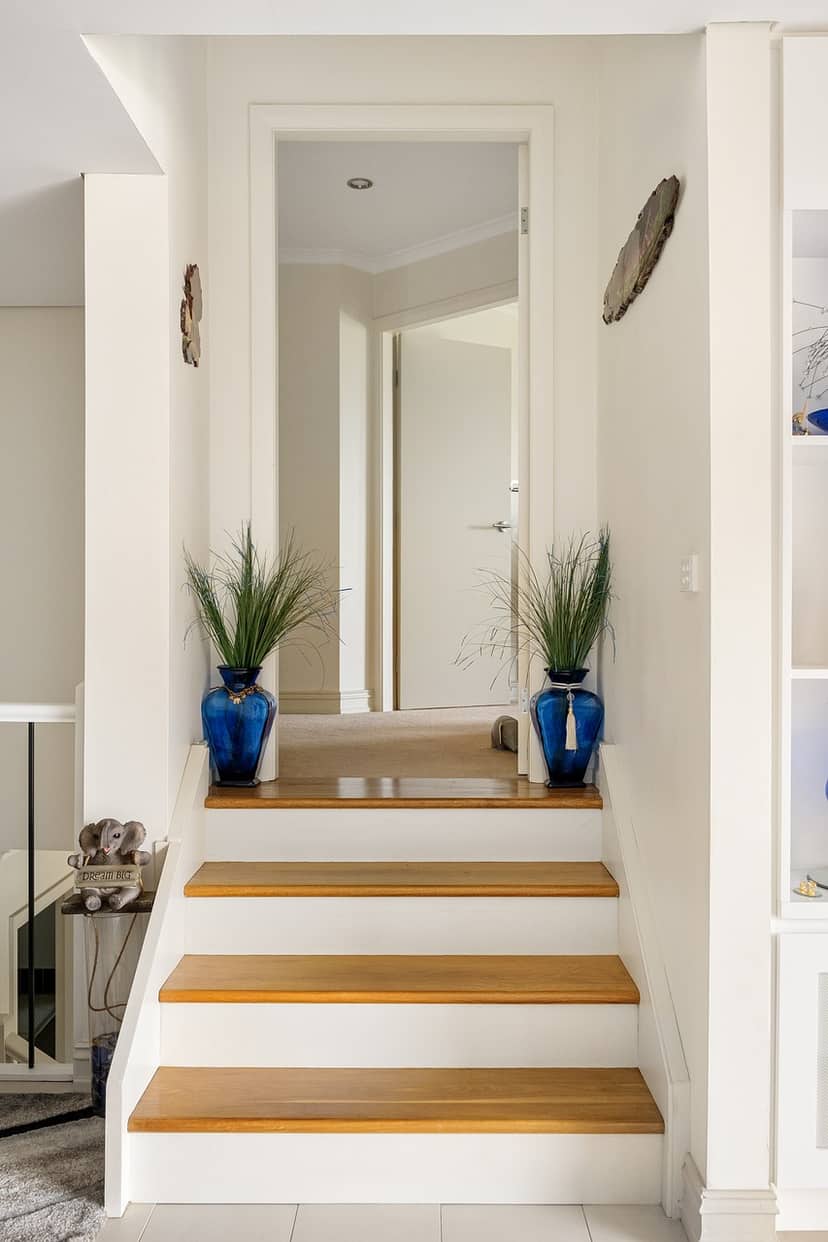
Oak hardwood stair treads with white risers in a narrow stairwell

Hardwood Stairs & Stair Treads

Stairs get new solid treads in oak, hickory, or maple, with bullnose or square nosing, matching risers, and landing nosing where the stairs meet the hall floor. Pull carpet off a staircase and the treads underneath are often pine or particleboard that was never meant to show, so those get capped or replaced. Existing hardwood stairs can be hand-sanded and refinished to match a new floor.

Hardwood Floor Repair & Refinishing

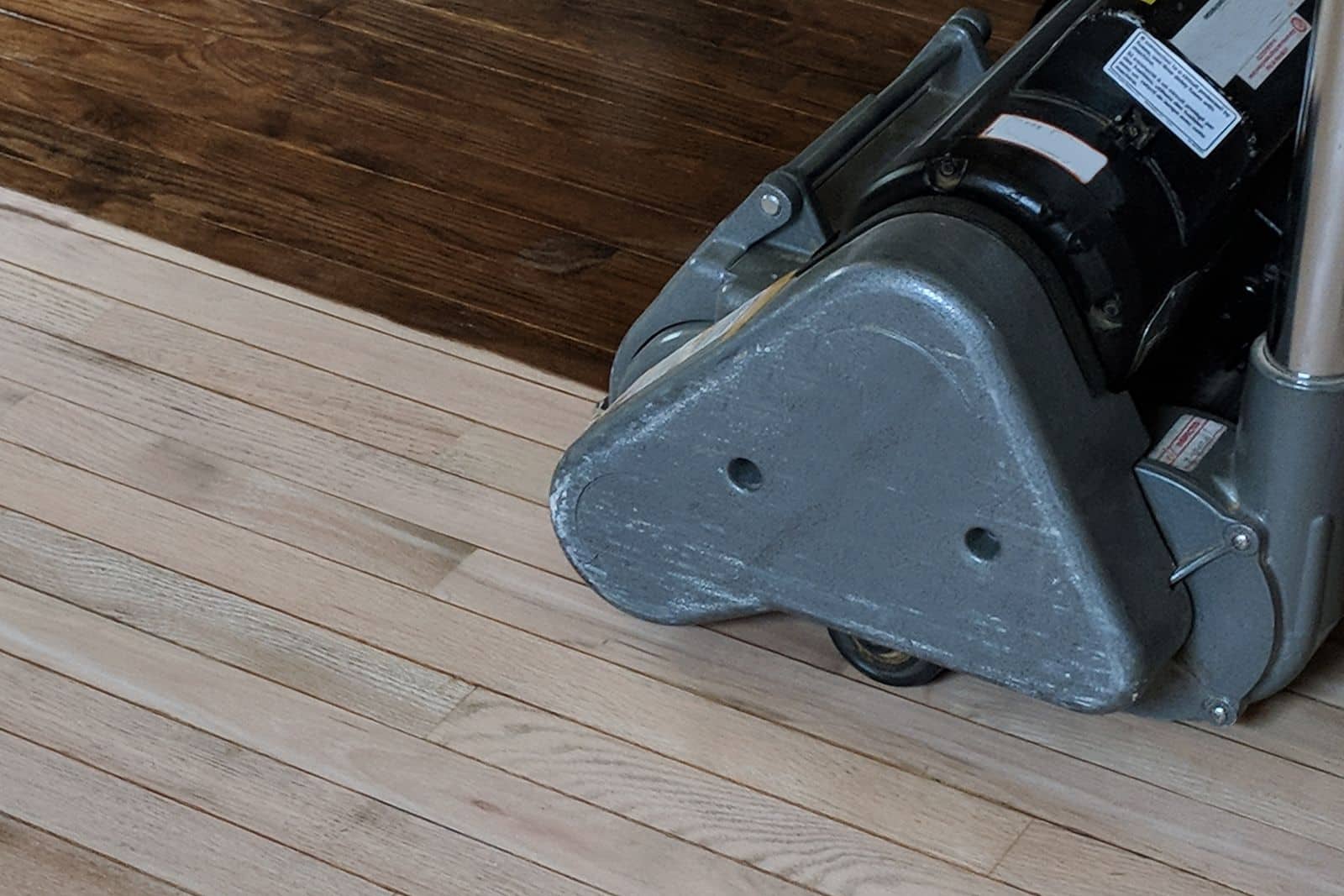
Drum sander on an oak strip floor, half sanded to bare wood and half still in the old dark finish

Hardwood Floor Refinishing

Sanding to bare wood starts with a drum or belt sander and an edger, working through a grit sequence such as 36, 60, then 80 or 100. With dustless equipment, a HEPA vacuum hose runs straight to the sander, so dust is captured at the machine instead of drifting into the next room. Stain only goes on when you're changing the color, then 2 to 3 coats of oil-based or waterborne polyurethane build the finish, matte to semi-gloss. When the finish is just dull and scuffed, a screen and recoat buffs the old coat and adds a fresh one without sanding into the wood.

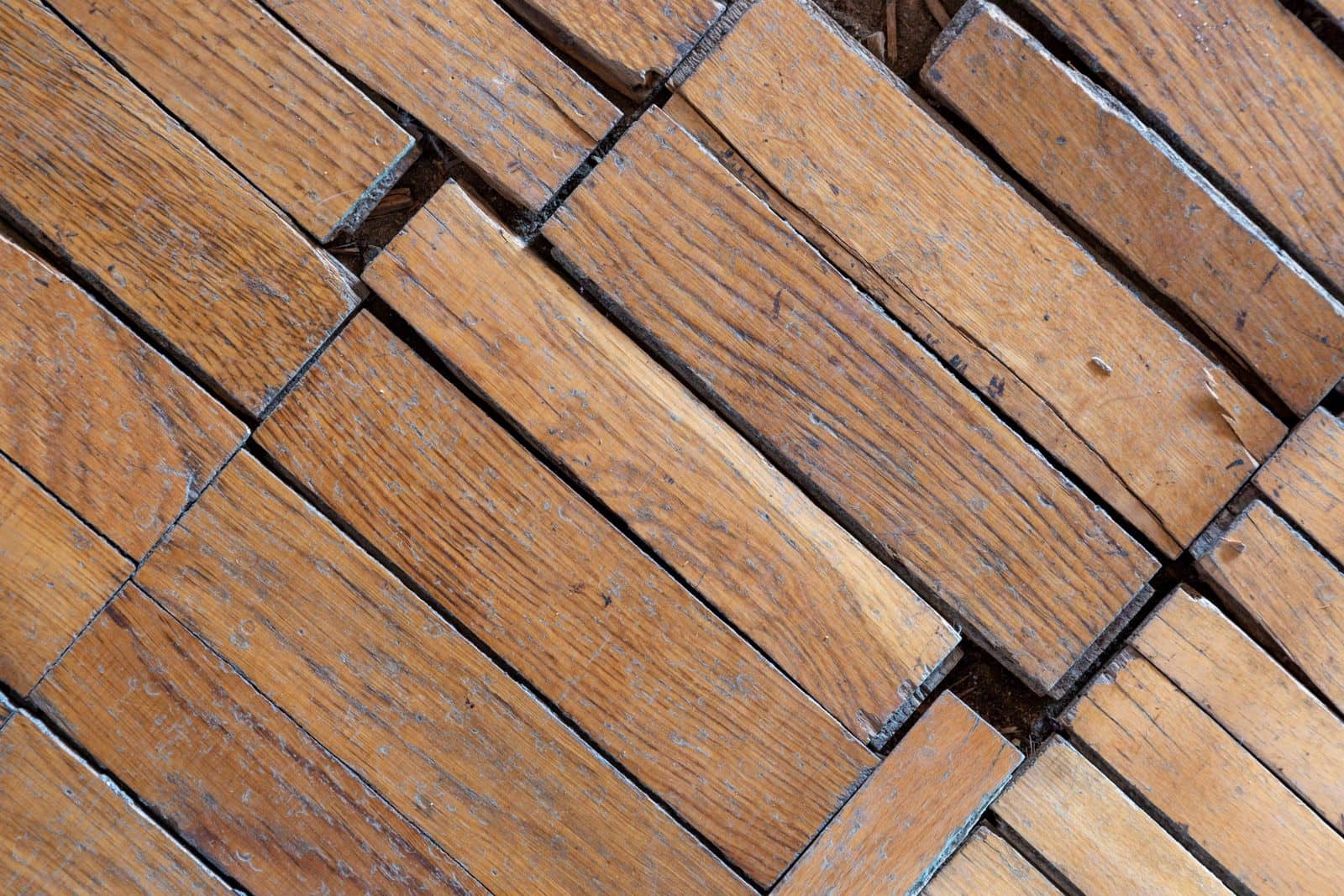
Loose oak parquet blocks lifting out of an old floor, ready for repair

Hardwood Floor Repair

Most repairs come down to a few boards: a pet stain that went black, a gouge from a dropped cast iron pan, or a squeak where the subfloor has worked loose from the joist. We cut out the damaged boards and lace in new ones of the same species and width, staggering the end joints so the patch doesn't read as a square. Squeaks get screwed down from below or face-nailed and filled. Wide winter gaps get filled only after we know they won't close again in summer.

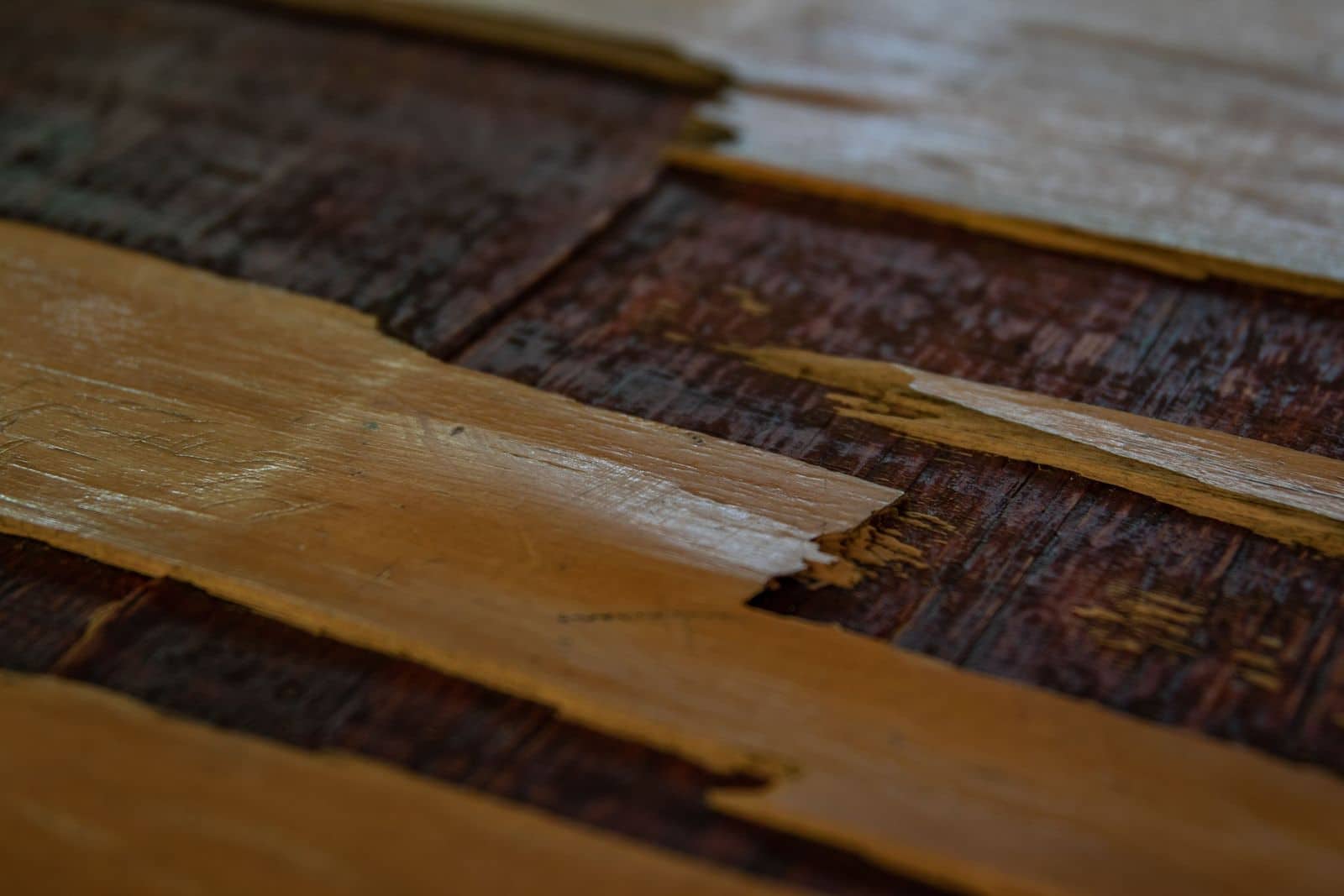
Close-up of a damaged wood floor with the top layer lifting and splitting

Water Damaged Hardwood Floors

A burst pipe, an ice dam leak, or a dishwasher supply line that let go all start the same way: moisture meter readings on the boards and the subfloor. Cupped boards (edges higher than centers) often flatten as they dry, while crowned boards usually got sanded before they were dry. Engineered planks that delaminate have to come out. Sanding waits until readings match the dry parts of the house, which can take weeks with fans and dehumidifiers running.

Commercial Hardwood Flooring

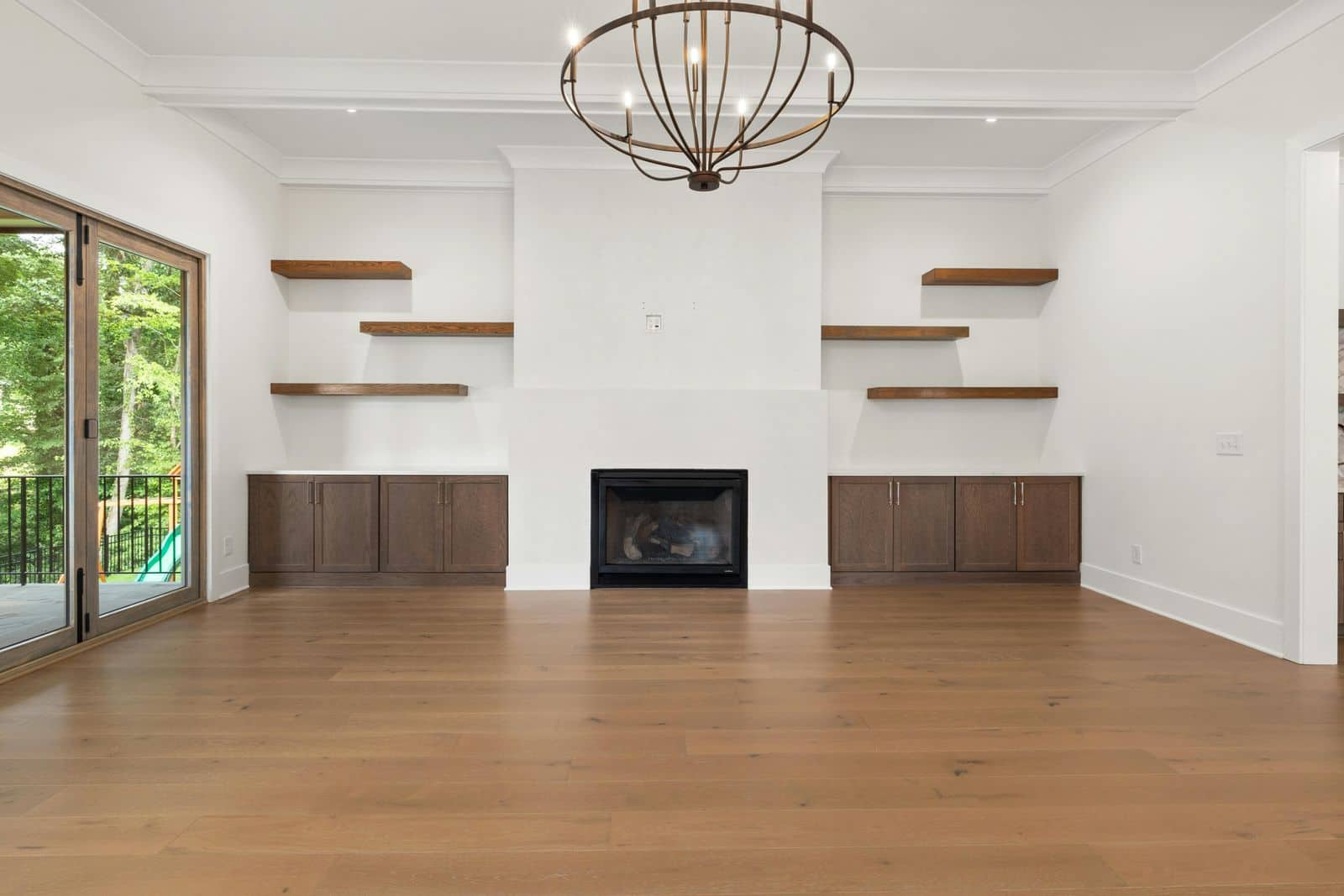
Large open room with a new oak plank floor, fireplace wall with built-in shelves, and a chandelier

Commercial Hardwood Floor Installation

Most commercial hardwood goes over a concrete slab, so the floor is usually engineered plank glued down with a moisture-control adhesive after an RH probe or calcium chloride test on the slab. Finish choice matters more than species here: a commercial-grade, low-VOC waterborne finish stands up to office chairs and carts and lets people back in sooner. Install can run evenings and weekends so the space keeps working.

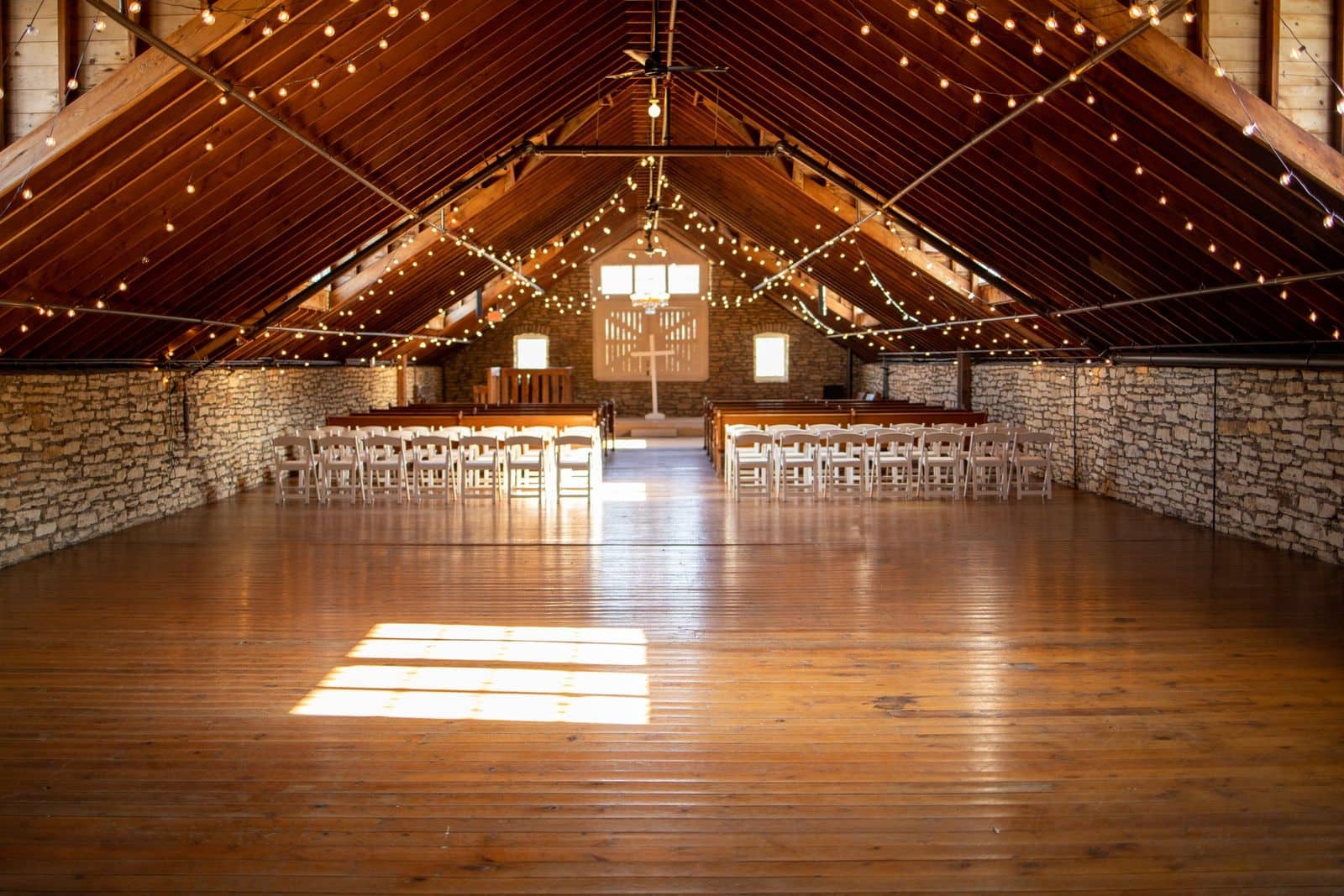
Long hardwood floor in a church hall with rows of chairs and pews

High-Traffic Commercial Floor Refinishing

Storefronts, church sanctuaries, lobbies, and restaurant dining rooms wear a path from the door to the counter long before the rest of the floor. A screen and recoat on a regular schedule keeps that traffic lane from wearing through to bare wood, which would force a full sand. Work gets scheduled after close or over a weekend, with dry time planned around your opening.

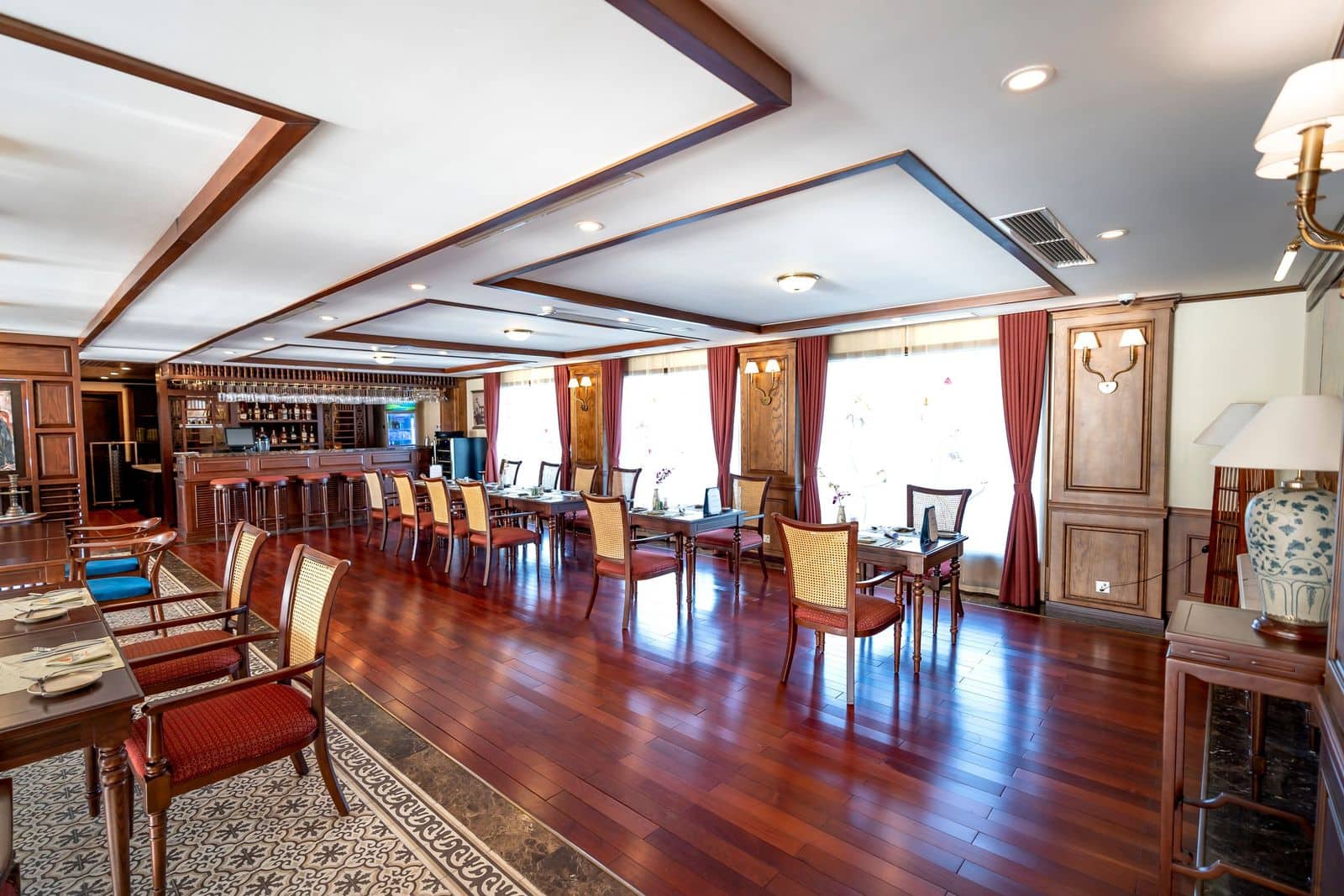
Restaurant dining room with a red-toned hardwood floor, tables, and chairs

Office, Retail & Restaurant Wood Floors

Chair casters, wet mopping, dropped trays, and road salt tracked in all winter are what a business floor fights. We spec a harder, caster-resistant topcoat, walk-off mats at the entries, and a satin or matte sheen that shows less wear and is less slick than gloss. Big rooms can be split into sections so part of the space stays open while the rest is worked.

Types of Hardwood Flooring

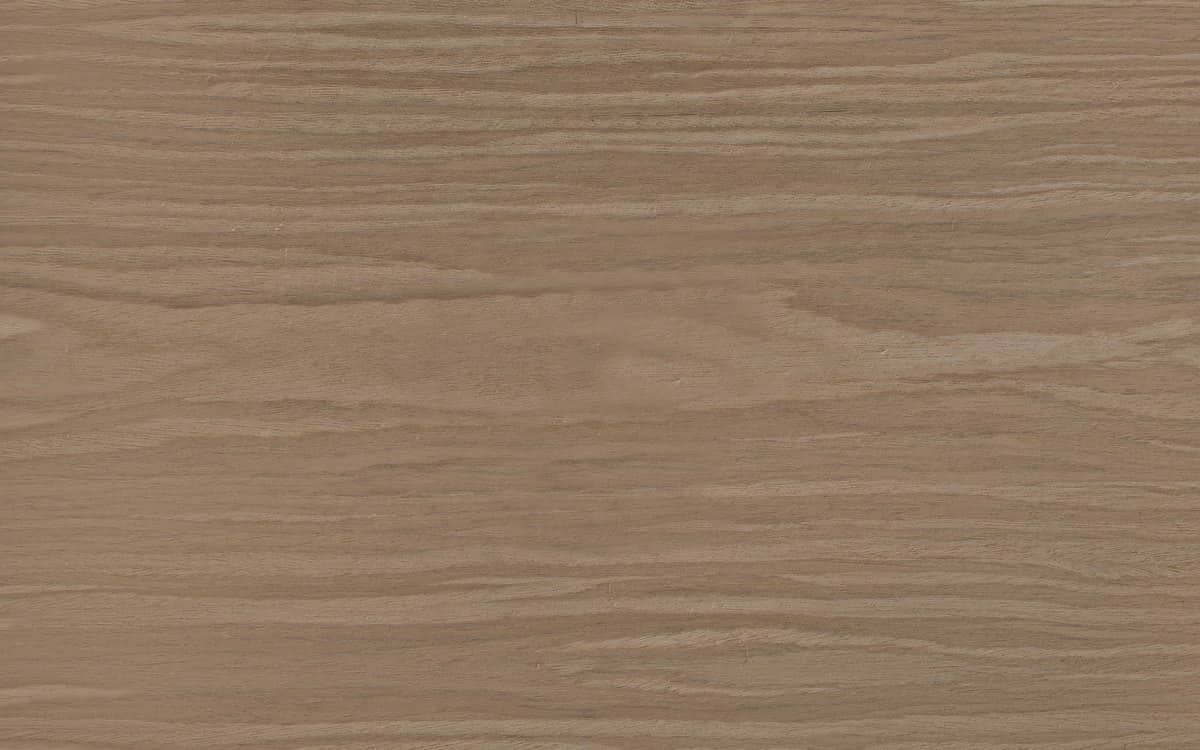
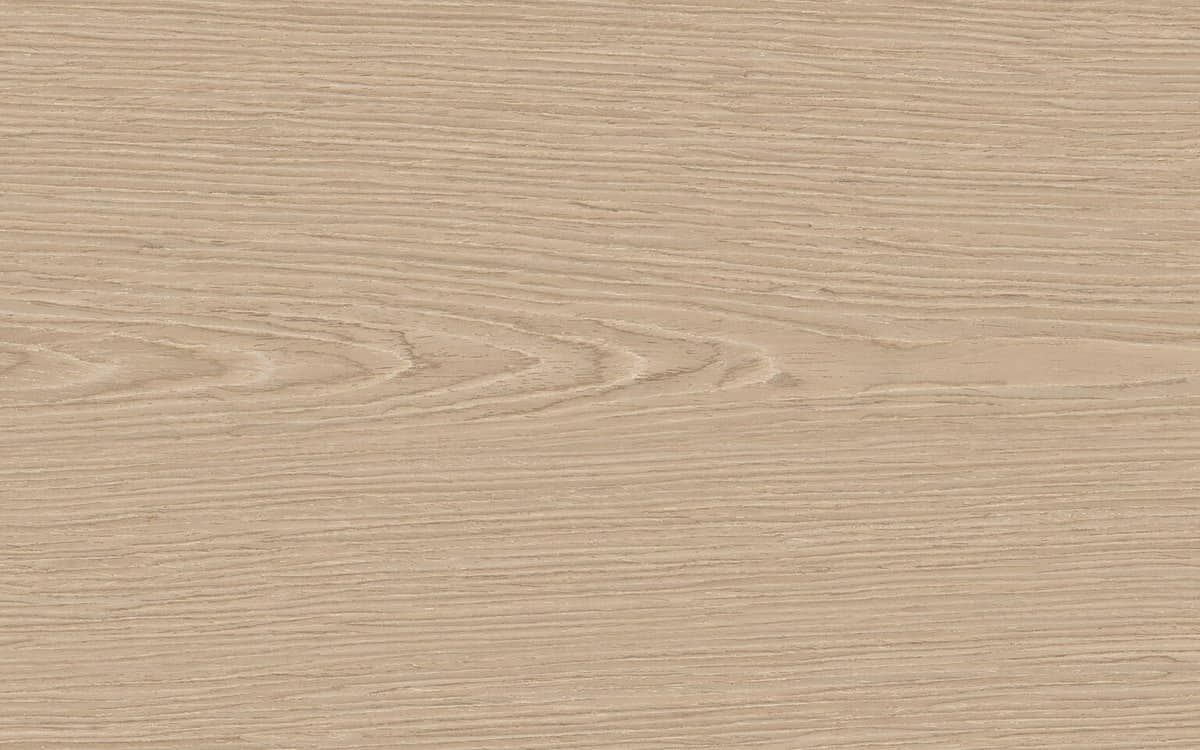
Close-up swatch of white oak wood grain
Hardness: 1,360 (Janka)

White Oak Flooring

White oak reads browner and more even than red oak, and its pores are naturally plugged, which is why it was the wood for whiskey barrels and boat building. Rift and quarter-sawn cuts show a straight grain and move less across the board, a real plus with our humidity swings. It looks right under a clear natural finish or a light stain.

Close-up swatch of red oak wood grain
Hardness: 1,290 (Janka)

Red Oak Flooring

Red oak is the floor a lot of older Eau Claire houses have under the carpet, usually 2-1/4 inch strip nailed over plank subflooring. Its open grain and pinkish tone take stain evenly, and because it's so common, matching boards for a repair or an addition is easy. Its hardness is the baseline other species get compared to.

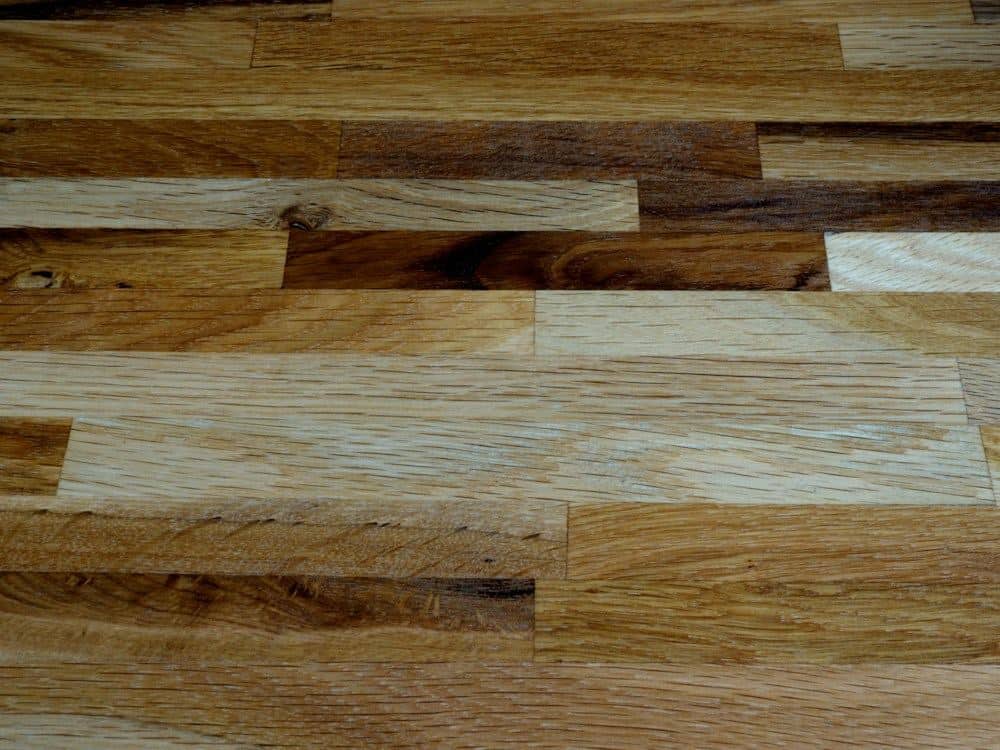
Close-up of hardwood planks with strong light-to-dark color variation, typical of hickory
Hardness: 1,820 (Janka)

Hickory Flooring

Hickory is roughly 40 percent harder than red oak and swings from cream to dark brown in the same board. That hardness and color variation hide dog nails, grit, and boots in a mudroom or kitchen. It is also tougher to sand and cut, which shows up in labor.

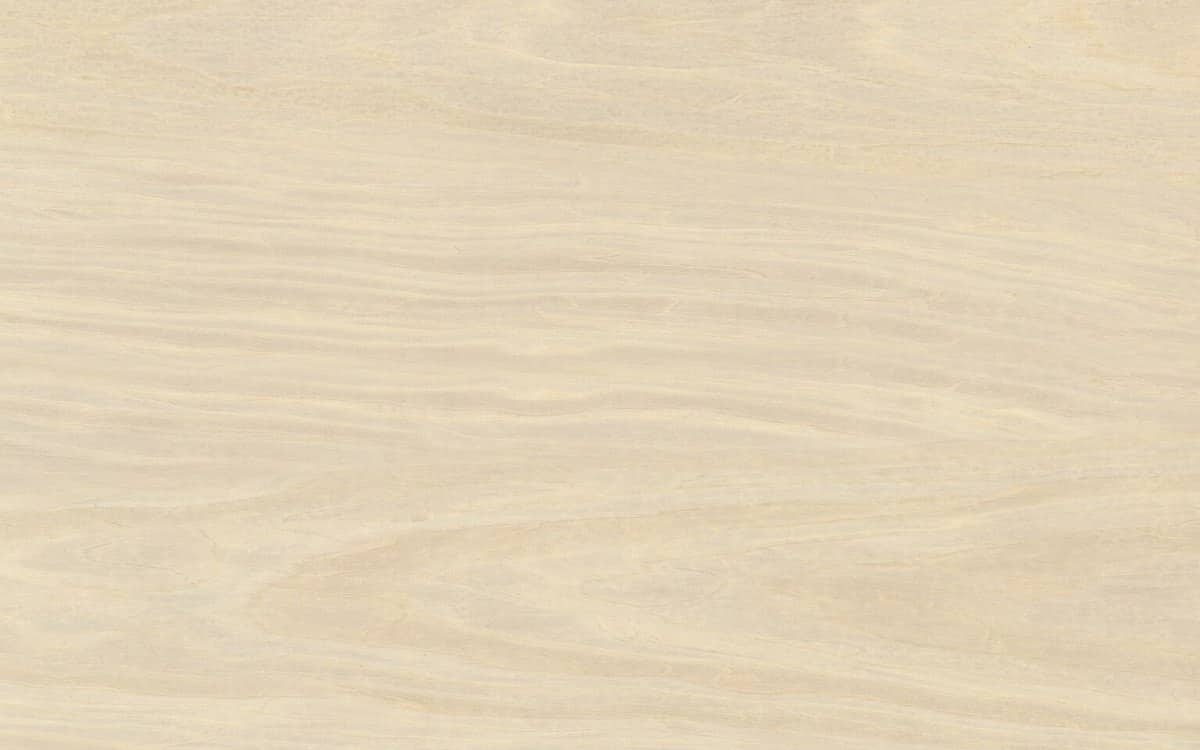
Close-up swatch of pale, fine-grained maple wood
Hardness: 1,450 (Janka)

Maple & Birch Flooring

Hard maple is tight-grained and pale, the same wood used on bowling lanes. It blotches under dark stain, so most maple floors get a clear finish or a conditioner before color. Yellow birch grows across northern Wisconsin and gives a similar light look at a little less hardness.

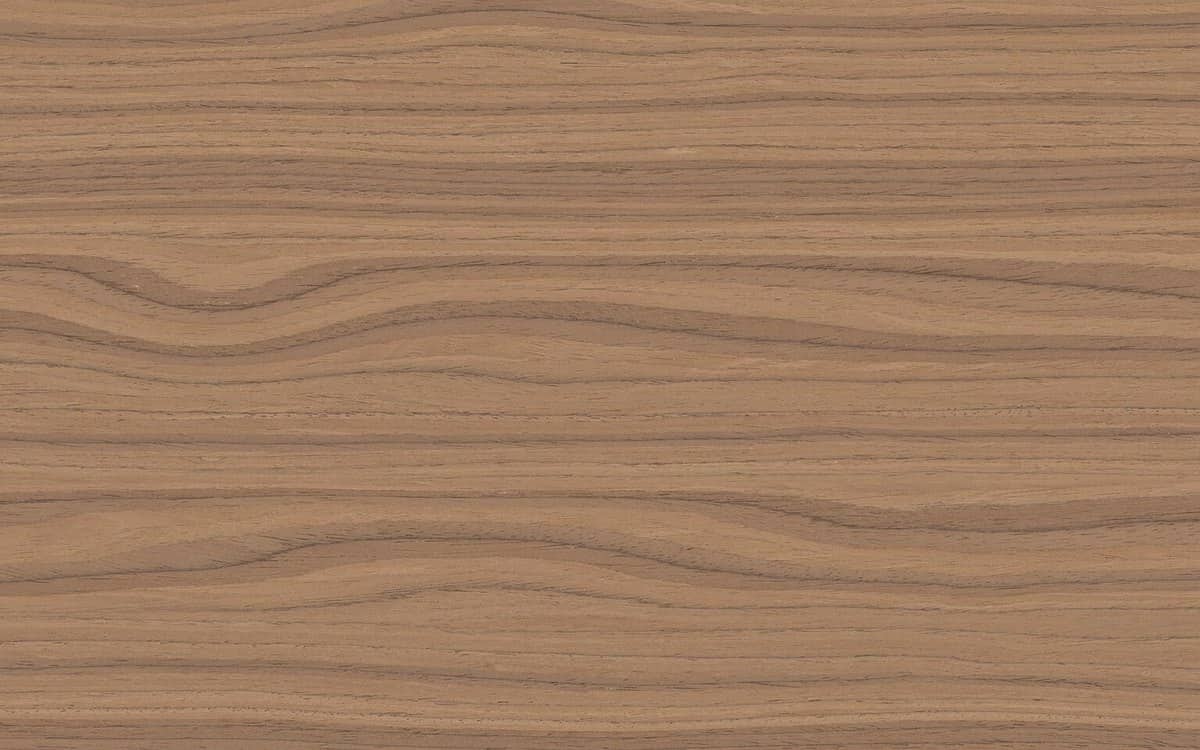
Close-up swatch of black walnut wood grain
Hardness: 1,010 (Janka)

Walnut Flooring

Black walnut gives up some hardness to oak, so it marks more easily in a busy room. The chocolate color drifts toward honey with years of sun. Solid walnut boards are costly, so a lot of walnut floors are engineered with a walnut wear layer. It's happiest in a room with rugs and socks, not boots and a dog.

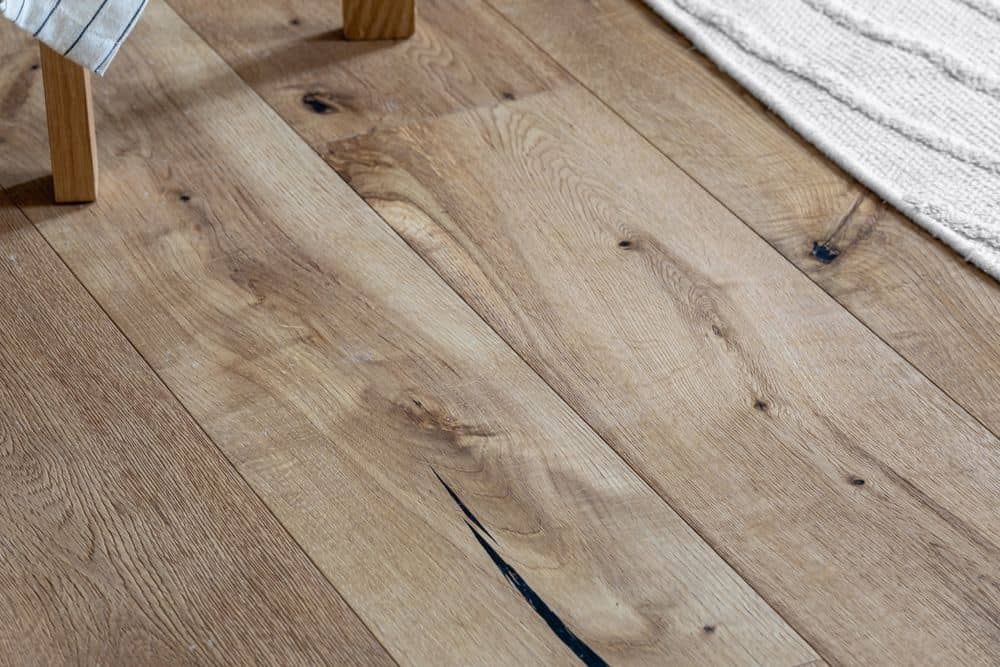
Wide rustic oak planks with knots and natural checks beside a rug
Boards 5 to 10 inches wide

Wide Plank & Reclaimed Hardwood

Wide plank runs 5 to 10 inches across, and every extra inch means more seasonal movement, so we lean on engineered wide plank or glue-assist on solid boards. Reclaimed hardwood comes out of old barns, mills, and warehouses, and western Wisconsin has plenty of those. Expect nail holes, saw marks, and mixed color, plus time for de-nailing and kiln-drying before install.

Our Hardwood Flooring Process

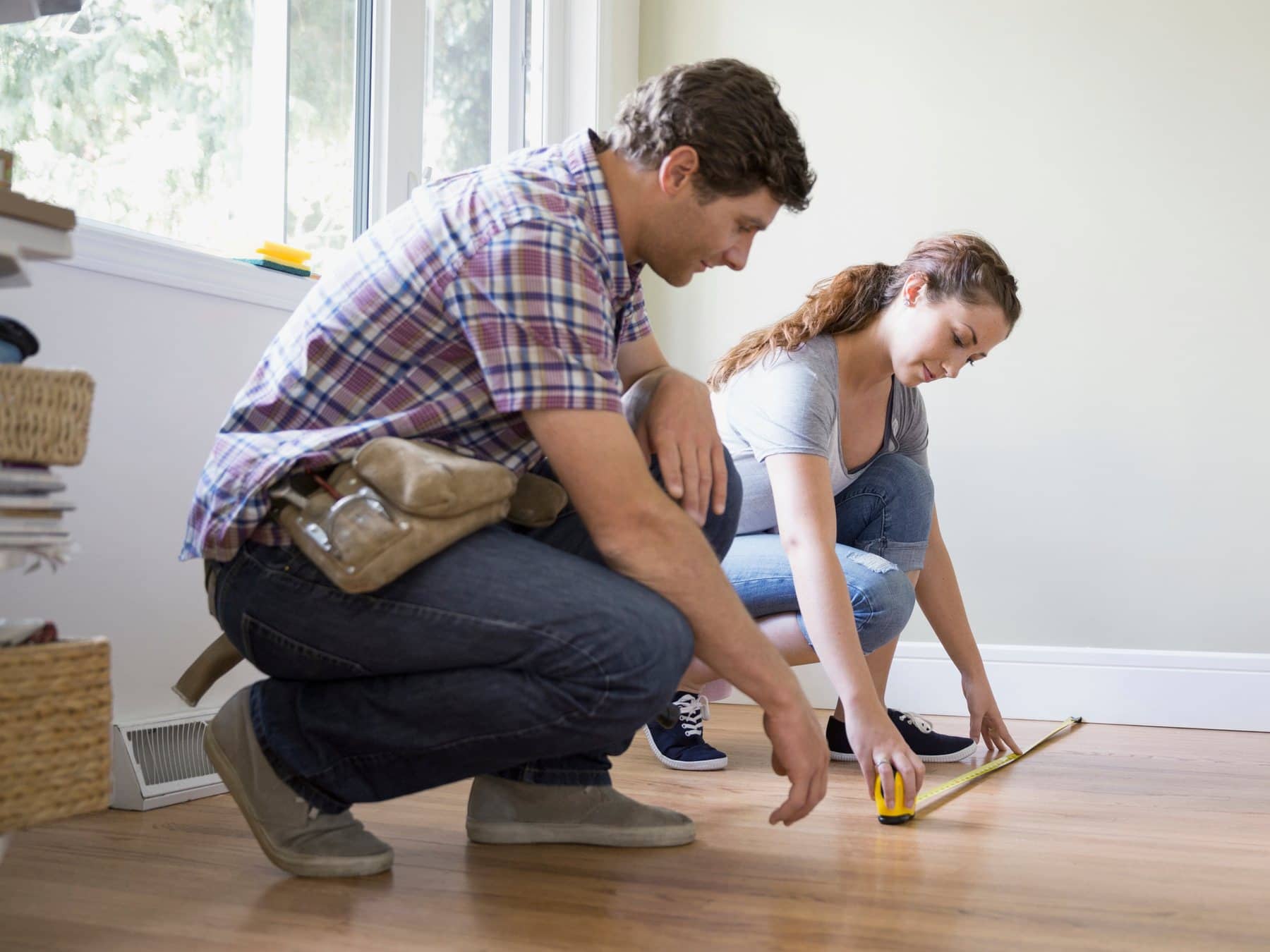
Two people kneeling on a hardwood floor, measuring the room with a tape measure
  1. In-Home Estimate

    We measure every room, check the subfloor, take moisture readings, and tell you whether the old floor is worth saving. You get a written scope with the numbers.

  2. Wood & Finish Selection

    You pick species, width, grade, and sheen from samples. We flag anything that won't suit a slab, radiant heat, or a busy back entry.

  3. Subfloor Prep

    Carpet, pad, tack strip, or old vinyl comes up. Loose subfloor gets screwed down, high spots get ground, and low spots get filled so boards sit flat.

  4. Installation or Sanding

    New wood acclimates, then gets nailed, stapled, glued, or floated. Existing floors get sanded through the grits with dust collection running.

  5. Finishing

    Stain if you want color, then coats of polyurethane with dry time between each one. The room stays closed until the last coat can take foot traffic.

  6. Final Walkthrough

    We go over the finished floor together in daylight, touch up anything missed, and explain when furniture can go back and how to clean the finish.

How Much Does Hardwood Flooring Cost in Eau Claire, WI?

Eau Claire Hardwood Floors prices every job after seeing the floor. For planning, here's what hardwood work typically costs in 2026 and what moves the number: species, solid vs. engineered, total square footage, how much subfloor repair turns up, stairs, and whether furniture has to be moved.

Hardwood Floor Installation Cost

National cost guides put installed hardwood at roughly $6 to $12 per square foot for common species, climbing toward $13 to $25 for premium wood, wide plank, and large whole-floor jobs. Unfinished boards sanded and finished in place add labor, and herringbone or parquet can add about 30 percent over a straight lay. Tear-out of old flooring and subfloor repair show up as separate lines on a real estimate.

Hardwood Floor Refinishing Cost

A full sand and refinish typically lands between $3 and $8 per square foot, with stain changes, dustless equipment, and board repairs pushing it higher. A screen and recoat, when the finish hasn't worn through, usually runs $1 to $2.50 per square foot. Stairs are usually priced per step instead of per square foot.

Get A Free EstimateWant a number for your floor? Set up the free estimate.
ProjectTypical 2026 range
Hardwood installed, common species$6 to $12 per sq ft
Premium species, wide plank, or large jobs$13 to $25 per sq ft
Site finishing unfinished boardsAdds $2 to $7 per sq ft
Herringbone or parquet patternAbout 30% over a straight lay
Full sand and refinish$3 to $8 per sq ft
Screen and recoat$1 to $2.50 per sq ft

Typical national ranges for labor and materials from Angi's published 2026 hardwood installation and refinishing cost guides. Not a quote. Final pricing depends on a site visit.

Hardwood Flooring in Chippewa Falls, Altoona, Lake Hallie & Menomonie

Eau Claire Hardwood Floors covers Eau Claire, WI plus Chippewa Falls, Altoona, Lake Hallie, and Menomonie.

Chippewa Falls has plenty of older homes with oak strip hiding under carpet. Newer builds in Altoona and Lake Hallie tend to bring basement and slab questions, where engineered plank earns its keep. Menomonie is about a half-hour west on I-94, close enough for refinishing work and rental turnovers between semesters.

  • Eau Claire
  • Chippewa Falls
  • Altoona
  • Lake Hallie
  • Menomonie

Hardwood Flooring FAQs

How many days does a hardwood floor install take?

Plan on about a day for a small bedroom and several days for an open main floor, plus a few days up front while the boards acclimate in the house. Skip that wait and the same boards that look tight in August open gaps when the furnace runs.

How long does refinishing take, and can we stay in the house?

Yes, most people stay home. A full sand and refinish usually runs 3 to 5 days, with sanding noise the first day or two and finish odor after that. Waterborne finish is often walkable in socks a few hours after each coat, while oil-based needs closer to a day per coat. Furniture and rugs wait longer while the finish cures, from a few days up to a couple of weeks.

Should I choose engineered or solid hardwood?

It depends on what's underneath. If the floor goes on concrete, below grade, or over in-floor radiant heat, go engineered. On a wood subfloor above grade, either works, and solid gives you more refinishes over the life of the floor.

Can the hardwood under my carpet be refinished?

Usually, yes. Pull up a corner in a closet and look at the edge of a board: 3/4 inch solid oak with a sound tongue has plenty of sanding left. Tack strip nail holes along the walls get filled. Boards blackened by pet urine typically need to be replaced before the sanding starts.

Can you refinish hardwood stairs?

Yes. Treads get sanded mostly by hand and with detail sanders because a big machine won't fit, then stained and coated to match the floor. Painted risers can be stripped or repainted, and worn nosing can be replaced. Stairs take longer than the same square footage of open floor.

What does hardwood cost per square foot around here?

Published 2026 guides put installed hardwood around $6 to $12 per square foot for common species and up to $25 for premium or wide plank. Refinishing the wood you already have runs about $3 to $8, which is why we check the old floor before anyone talks about tearing it out.

Tell us about the floor

Send a few details about the rooms and the wood, and we'll set up a free estimate.

Get My Free Estimate
Call NowGet Estimate